Collection Principles
The site collects speeches, letters, how-to manuals, flyers, posters, and other propaganda material produced by and for Nazis and the German Democratic Republic. In the FAQ section, the site author explains that many of the materials are from his personal collection and other are transcribed from archives. He is not actively seeking more material, but working to digitize what he already has.
Object Characteristics
The site isn't very flashy, but it is fascinating. Essays, pamphlets and speeches are presented as text-only, translated documents. It appears that the site maintainer translated all the texts himself.
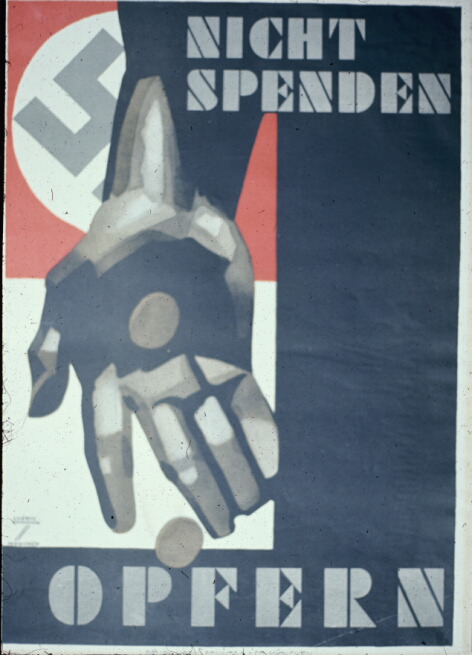
The site also includes visual resources. Conveniently linked from the home page (click on visual material under either Nazi propaganda or East German propaganda.) The images are rather large and you can zoom in on them, but only one step and it's not very helpful. If you can't see the image at normal size, the zoom won't help you much.
Metadata
Each object contains a citation to the original source. The site author also includes background information about the object to provide some context for the researcher.
Audience
The site author states in his FAQ that teachers, researchers, and students may use his work without seeking any kind of permissions. They would seem to be his intended audience. Although, I'm sure history and military buffs might also be interested in the archive. While looking through the material, I couldn't help but think that Neo-Nazi groups could also use the archive for their own reasons. He addresses this directly in his FAQ saying that he has been plagiarized by Neo-Nazi groups. This presents an interesting question that has been debated by librarians for decades. Where do information professionals draw the line between providing access to potentially dangerous information and censorship?

No comments:
Post a Comment